
Building a Model Portfolio in Hyderabad: What Actually Gets You Noticed
Hyderabad's film, fashion and advertising industries all cast from portfolios. Here's what casting directors actually look for — and how to build a book that works.
Read Article
Hyderabad's families are global. A single wedding guest list can span Dallas and Dubai, Melbourne and Muscat — and for every relative who flies in, there's one who can't. Wedding live-streaming has quietly become standard at the city's bigger celebrations, and the difference between a shaky phone on a tripod and a professional stream is the difference between relatives squinting at pixels and grandparents abroad genuinely being in the room.
A proper wedding stream is a small live-TV production. Multiple cameras — typically one locked wide on the mandap, one operated close camera, and often a roaming third — feed a vision mixer where an operator cuts between angles in real time. Dedicated audio taps the priest's microphone rather than relying on camera mics, so the mantras that matter reach the viewers clearly. And the whole rig runs on redundant internet: a bonded connection or a backup line, because a stream that dies during the muhurtam cannot be apologised for.
Most families don't want their wedding on the open internet. Professional setups stream to unlisted or password-protected links shared only with the invitation — grandparents click a link on WhatsApp and they're in, with nothing searchable afterwards. Ask explicitly for this; it separates professional services from someone pressing "go live" on a social account.
A Hyderabad muhurtam at 10 am lands at half-past-midnight in New York and 6:30 am in Sydney. Thoughtful families plan around this: the live stream serves the Gulf and Asia comfortably, while a same-day highlight cut — the ceremony's best twenty minutes, edited within hours — travels to the timezones that slept through it. The best setups also keep the full recording available for a fortnight, so no relative anywhere misses the talambralu.
A screen at the venue showing waving relatives abroad. A moment in the programme when the couple greets the camera directly. Names of remote family in the stream's welcome card. These cost nothing and turn viewers into participants — which is, after all, the entire point.
Weddings have always gathered scattered families; technology has just widened the room. Done professionally, a live stream means nobody who loves the couple watches the day as an outsider.
Let our team capture every sacred moment with the reverence it deserves.
 Photography
Hyderabad's film, fashion and advertising industries all cast from portfolios. Here's what casting directors actually look for — and how to build a book that works.
Read Article Photography
From pearl jewellers to startup-corridor D2C labels, Hyderabad brands are discovering the same truth: on a marketplace listing, the photograph is the product.
Read Article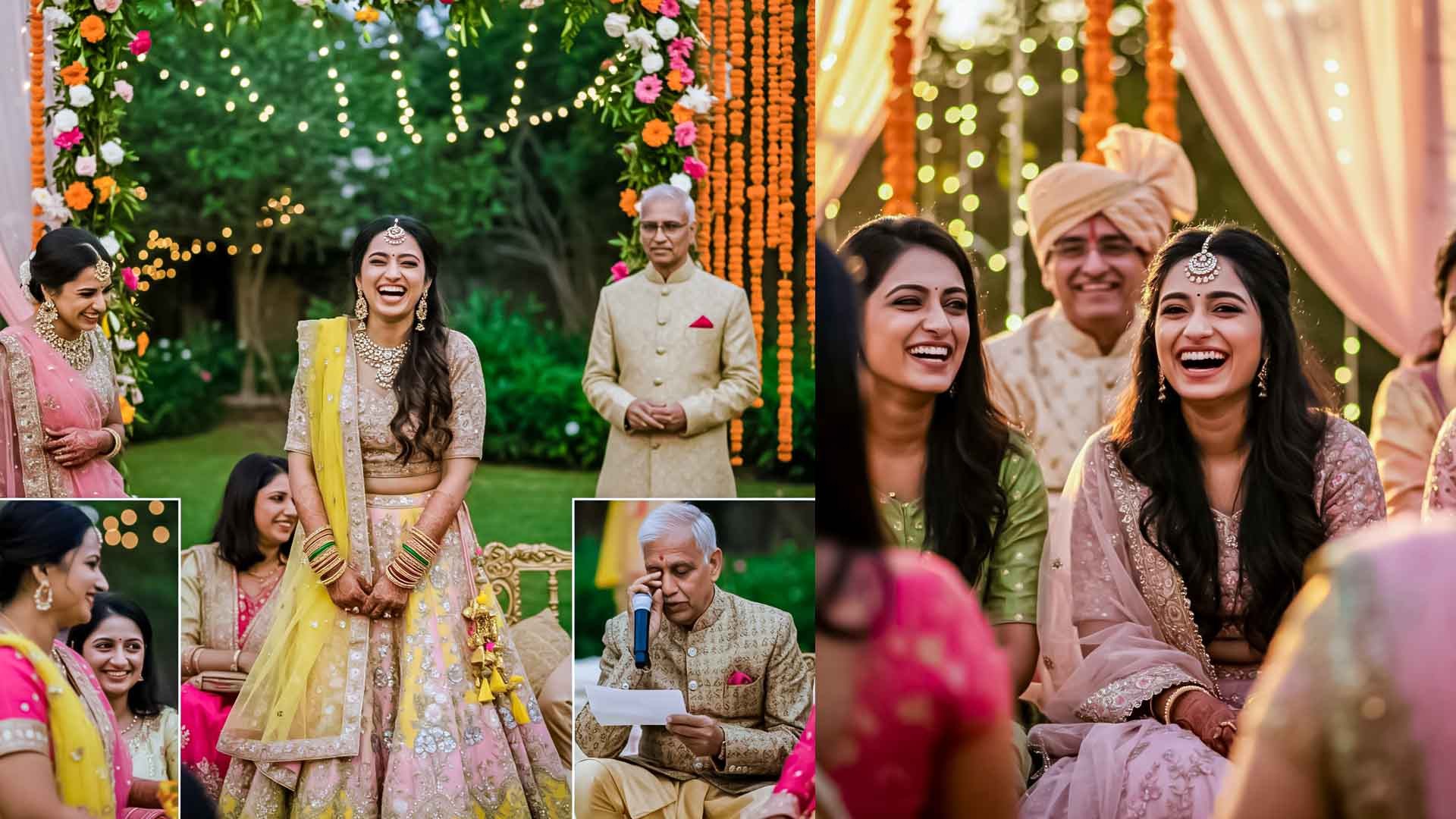 Photography
Pellikuthuru to appagintalu — a ritual-by-ritual guide to how a Telugu wedding unfolds, and the moments your photography team should never miss at each stage.
Read Article